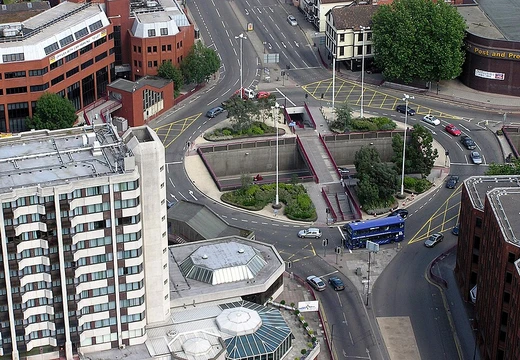
Cable transport
Cable transport uses cables to move passengers and goods.

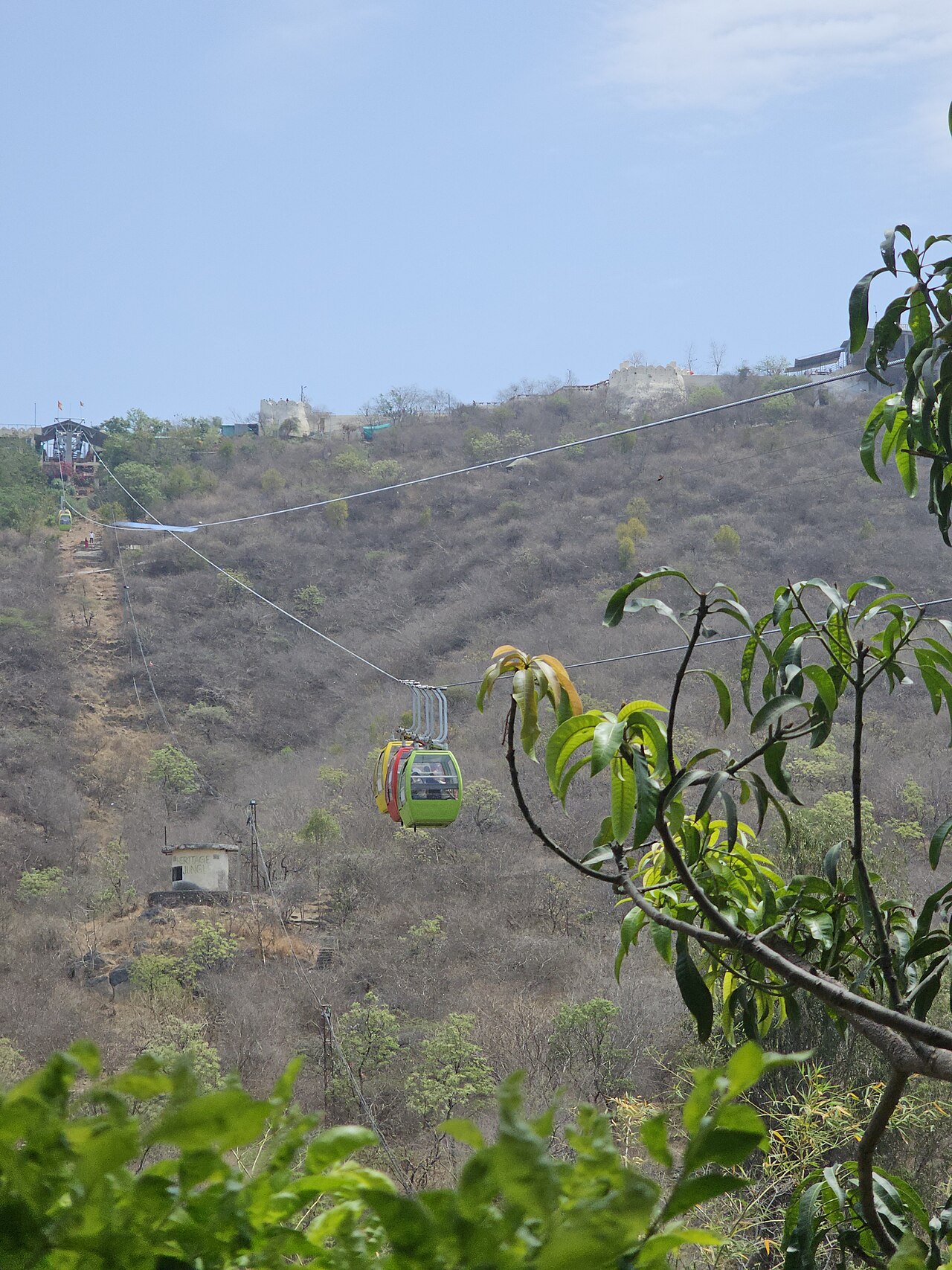
Gannu03 · CC BY-SA 4.0
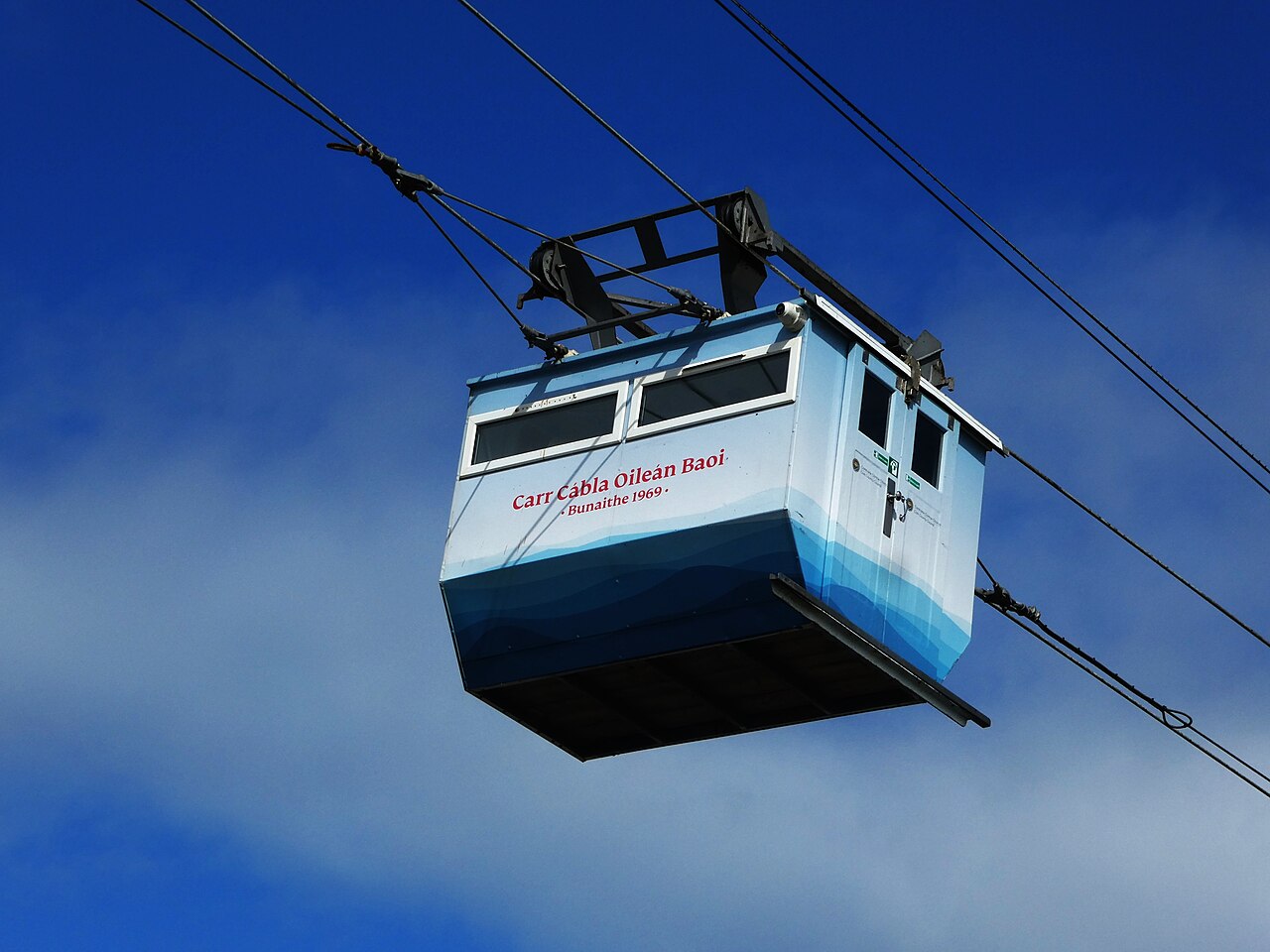
Cable transport is a broad class of transport modes that use cables to move passengers and goods, often in vehicles called cable cars. The cable may be driven or passive, and items may be moved by pulling, sliding, sailing, or by drives within the object being moved on cableways. Common elements include pulleys and balancing of loads moving up and down. Cable transport is often used in mountainous areas to overcome large differences in elevation. Forms include aerial transport, cable railways, and other cable-hauled systems such as cable ferries, surface lifts, and elevators.
- first_commercial_passenger_aerial_tramwa
- 1900s
Lore & Background
The technology was further developed in the Alpine regions of Europe and expanded with the advent of wire rope and electric drive. World War I motivated extensive use of military tramways between Italy and Austria.
Reader's Guide
Cable transport has evolved from ancient rope-drawn systems to modern urban cableways. They offer advantages like small environmental footprint, lower cost, and reduced crime in some cities, but face challenges from weather and slower speeds.
Ancient Origins and the Birth of Mechanical Ropeways
Cable transport stretches back further than most modern transit systems. Illustrations from South China dating to 250 BC depict aerial ropeway systems, suggesting that the fundamental idea of using a suspended line to move loads across distance was already practical knowledge in antiquity. The first recorded mechanical design came from Venetian Fausto Veranzio, who in 1616 conceived a bi-cable passenger ropeway. The industry generally credits Dutchman Adam Wybe with constructing the first operational system in 1644, and the technology subsequently flourished among Alpine communities in Europe. The introduction of wire rope and electric drive transformed what had been a rudimentary hauling method into a scalable engineering discipline. American inventor Peter Cooper is often cited in connection with early wire-rope aerial tramways; while evidence for a 1832 Baltimore installation is partial, he undeniably built a two-mile iron-ore tramway at Ringwood, New Jersey, in 1853. World War I drove extensive military tramway construction between Italy and Austria, and the industrial revolution's steel cable enabled far larger systems. By the 1900s, aerial tramways were finally carrying commercial passengers.
The Cable Railway Revolution on Steep Streets
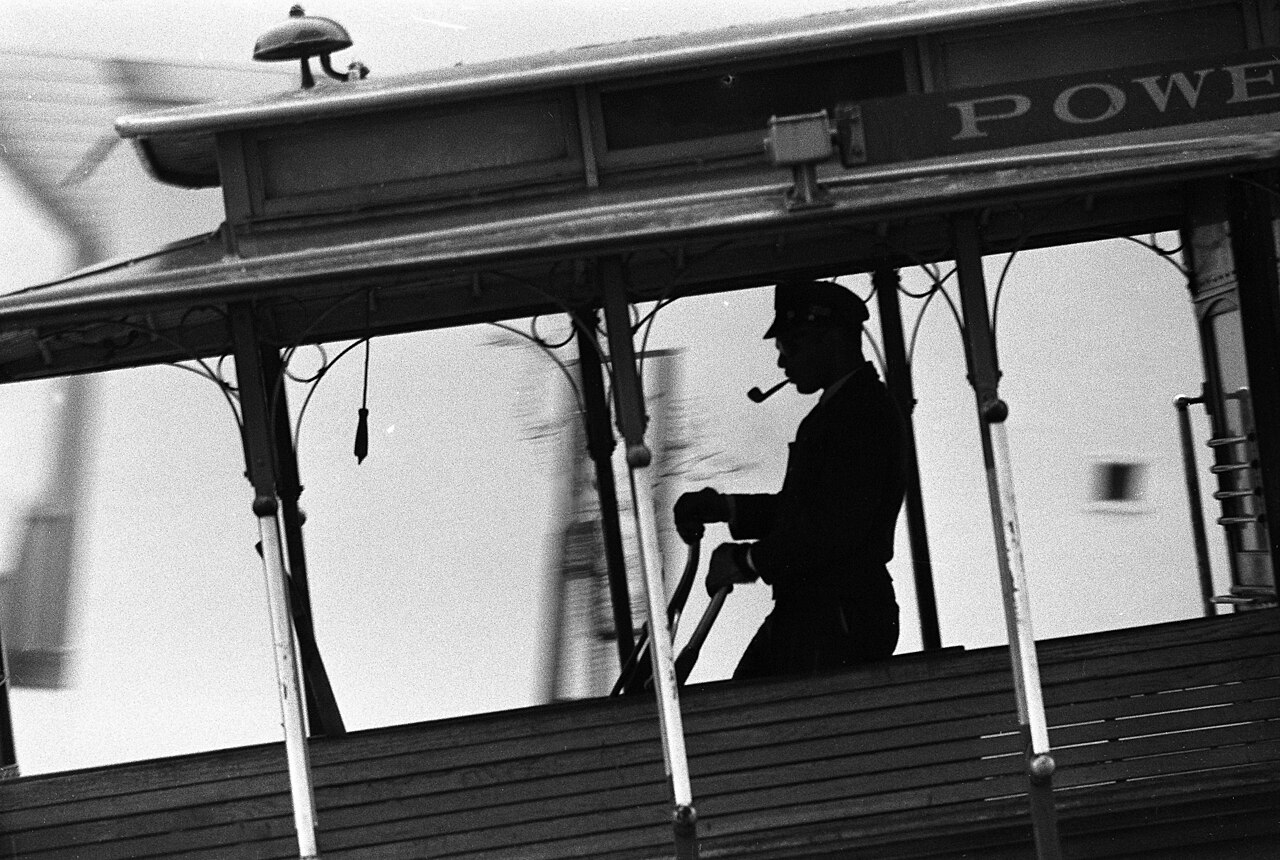
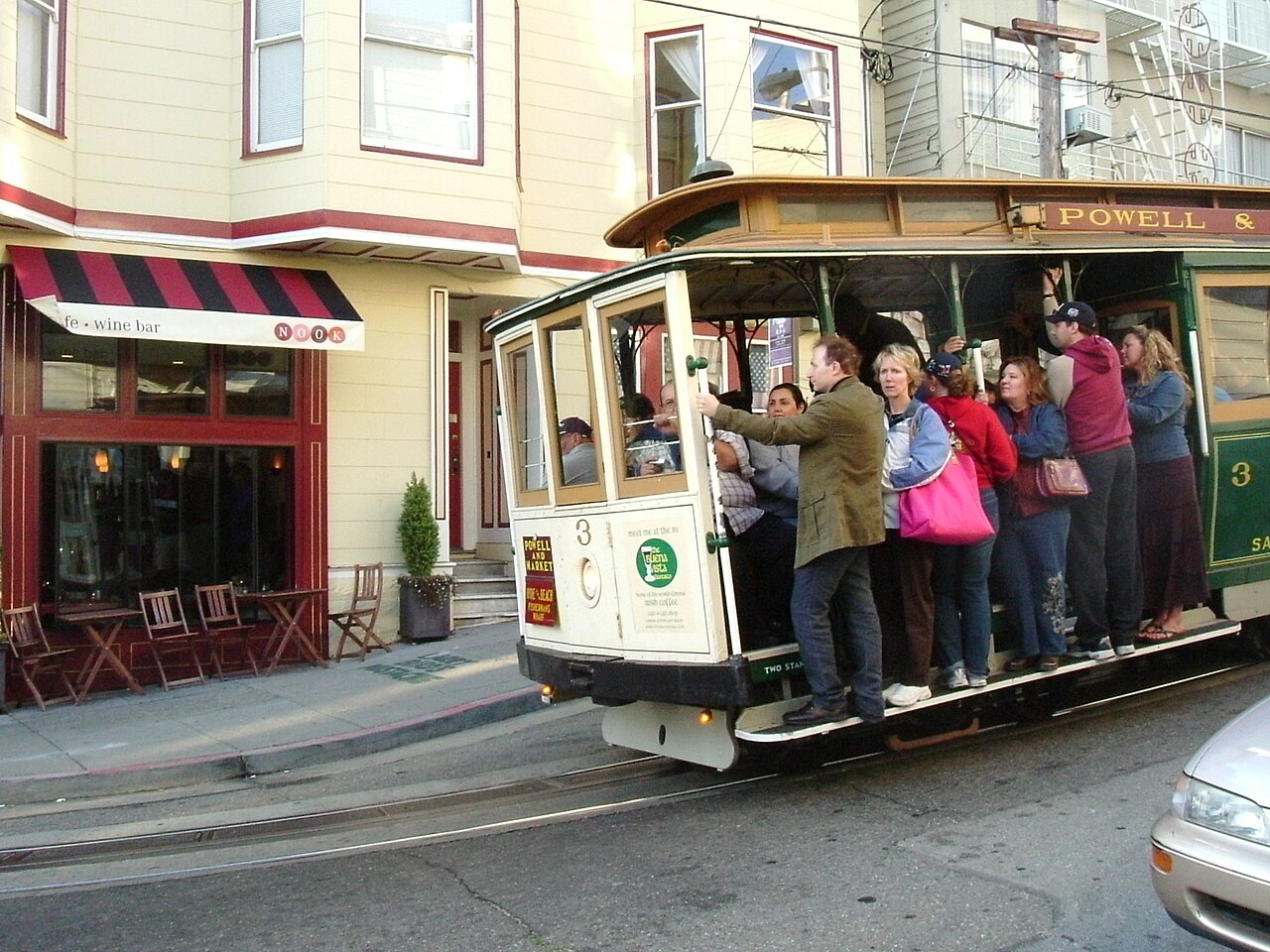
The gravity incline represents the simplest ancestor of all cable railways: two parallel tracks on a steep gradient, a single rope wrapped around a winding drum, and loaded wagons whose descent hauled empty ones upward, with a brake governing speed. The Llandegai Tramway at Bangor, North Wales, opened in 1798 and stands among the earliest examples using iron rails. In 1840, the London and Blackwall Railway attempted a cable-hauled street line using fibre to grip the haulage rope, but persistent technical and safety problems forced a switch to steam locomotives by 1848. The funicular concept arrived in Lyon in 1862, and the Westside and Yonkers Patent Railway Company ran a three-and-a-half-mile elevated cable line in New York from 1868 until its 1871 conversion to steam. The breakthrough for urban cable cars came in San Francisco, where Scottish emigre Andrew Hallidie, a steel-cable manufacturer, opened the Clay Street Hill Railroad on August 2, 1873. His human-operated grip allowed safe starting and stopping, and his rope design let multiple independent cars share one line. By 1890, America boasted over 500 miles of cable-hauled track serving more than a million passengers annually, though electric tramways soon surpassed them in mileage, efficiency, and speed.
Cable Transport Meets the Winter Mountains
The marriage of cable technology and winter recreation began in 1908, when German Robert Winterhalder built the first surface lift in Schollach/Eisenbach, Hochschwarzwald, which commenced operations on February 14 of that year. A steam-powered toboggan tow nearly 300 metres long followed in Truckee, California, in 1910, but the first skier-specific tow in North America was installed in 1933 by Alec Foster at Shawbridge in the Laurentians outside Montreal, Quebec. The modern J-bar and T-bar mechanism, which would become the defining silhouette of countless ski slopes, was invented in 1934 by Swiss engineer Ernst Constam, with the initial installation going up in Davos. The chairlift arrived in 1936, created by James Curran, a Union Pacific bridge designer. Co-owner of the railroad, William Averell Harriman, who also owned America's first ski resort at Sun Valley, Idaho, tasked his design office with solving the problem of getting skiers to the summit. Curran adapted a cable hoist he had originally designed for loading bananas in Honduras, producing the first chairlift and launching an entirely new category of mountain transport.
A Modern Resurgence in Urban and Alpine Settings
For decades, cable transport occupied a niche role, most visibly on ski slopes where lifts were the only practical way to move people uphill. That is changing. Growing public concern over pollution is prompting a reconsideration of cable-based transit as a viable alternative to road vehicles, and new projects are being initiated in locations as diverse as New Zealand and Chicago. These modern systems are increasingly classified by the type of track their design is based upon, reflecting a maturing engineering discipline. In the alpine world, the 2018 inauguration of the highest 3S cablecar in Zermatt, Switzerland, marked a significant milestone. After more than two years of construction, the line, popularly known as the Matterhorn Glacier Ride, now carries passengers to the summit of the Klein Matterhorn at 3,883 metres. The broader social effects of cable transport are beginning to carry more weight as the technology moves beyond difficult-to-operate terrain into everyday urban mobility, signaling that a mode once confined to mountains and ski resorts is re-entering the mainstream conversation about how cities move their people.
Gallery
Frequently Asked Questions
What is Cable transport in Transportation Engineering 1-17?
Cable transport is a wide family of movement systems that use one or more cables to carry people or freight, usually in vehicles commonly called cable cars. Depending on the design, the cable can be actively driven or simply serve as a passive guide, and the load may be hauled, slid, or propelled by drives built into the vehicle itself.
How does Cable transport actually work mechanically?
Pulleys steer the cable along its route, and the system typically balances opposing loads so that one vehicle descending helps pull another ascending. Propulsion can come from a powered cable, from drives inside the moving object, or from a combination of both along the cableway.
Where is Cable transport most commonly used and why?
It is a go-to solution in mountainous terrain where steep elevation changes make conventional road or rail traction impractical. By decoupling the driving force from the vehicle's weight, cables let systems climb gradients that standard wheels or tracks simply cannot handle.
More in Transportation Engineering 1-17
Spotted an error? Know more?
This is a living reference — every entry is fact-audited, and reader corrections feed straight into our audit queue. Suggest an edit · See this site's audit record