Barge
Flat-bottomed boat without mechanical propulsion, used for cargo.

Matti Blume · CC BY-SA 4.0
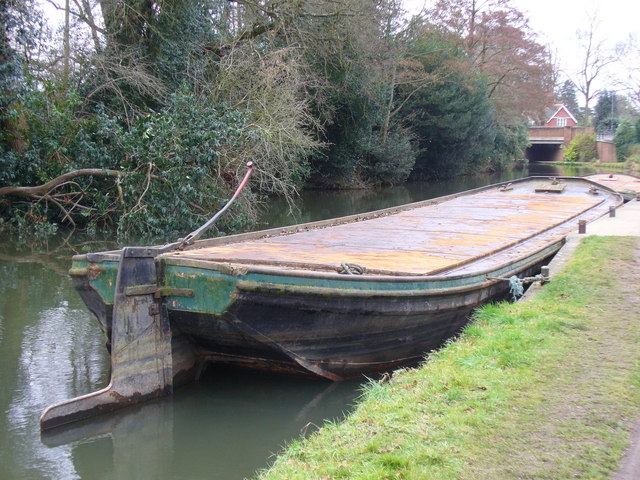
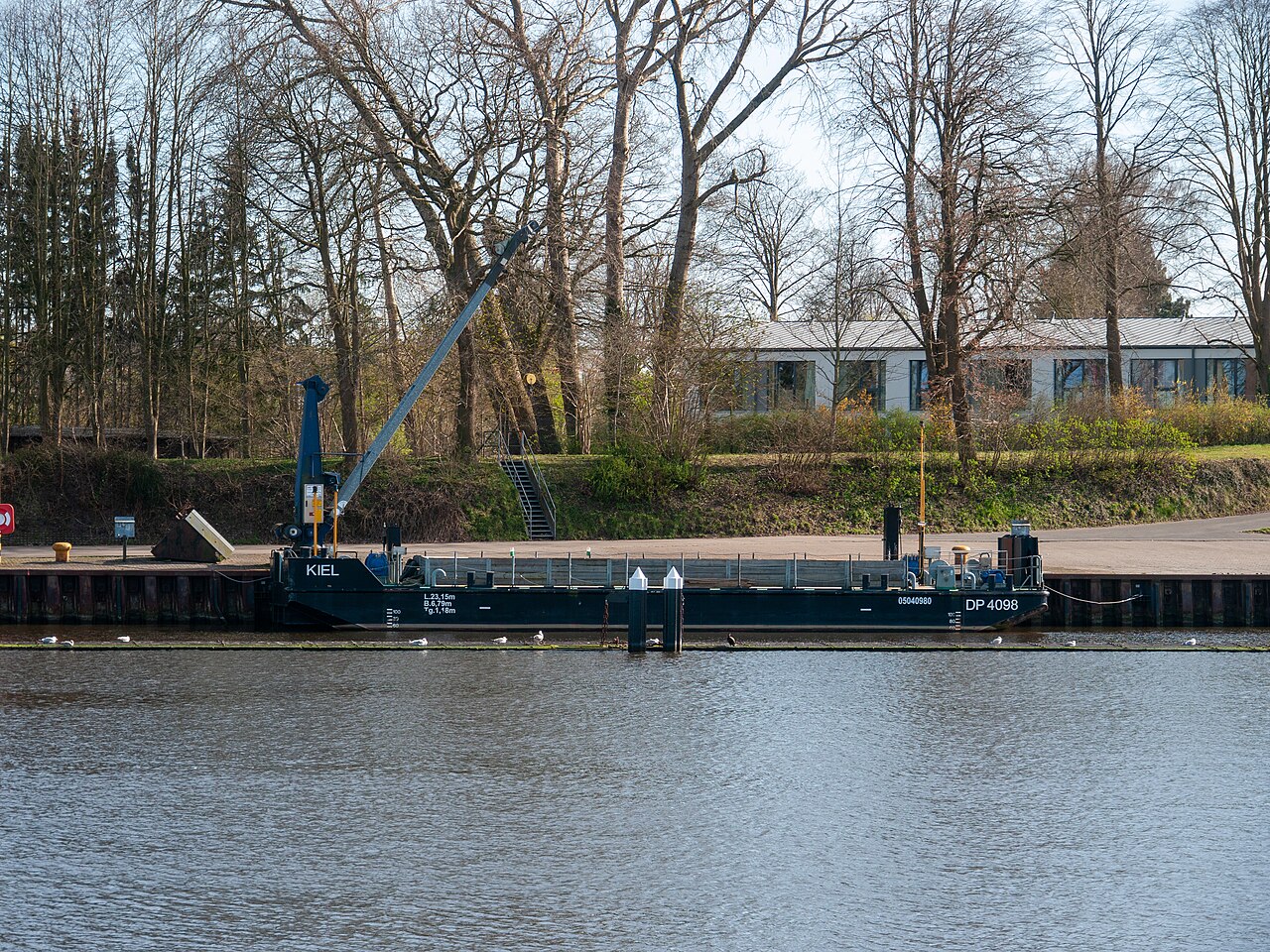
A barge is typically a flat-bottomed boat without its own means of mechanical propulsion. Originally used on inland waterways, modern barges operate on both inland and marine water environments. The first modern barges were pulled by tugs, but on inland waterways most are pushed by pusher boats or other vessels.
- Field
- Maritime transport
- Known for
- Transporting low-value bulk items and heavy cargo without self-propulsion
Lore & Background
Both are probably derived from the Latin 'barica', from Greek 'baris' meaning 'Egyptian boat', from Coptic 'bari' meaning 'small boat', and from hieroglyphic Egyptian 'ba-y-r' for 'basket-shaped boat'. By extension, the term 'embark' literally means to board the kind of boat called a 'barque'. In Great Britain, a merchant barge was originally a flat-bottomed merchant vessel for use on navigable rivers. Most of these barges had sails. On the River Severn, the lesser sort were called barges and frigates, from forty to sixty feet in length, with a single mast and square sail, carrying from twenty to forty tons burthen. By the 1890s, the word barge had many meanings that varied locally. On the Mersey, a barge was called a 'Flat'; on the Thames, a Lighter or barge; on the Humber, a 'Keel'. The term 'dumb barge' surfaced in the early nineteenth century, first denoting a mooring platform, then a vessel propelled by oars only, and by the 1890s was still used only on the Thames.
Reader's Guide
The barge has been a fundamental vessel for inland waterway transport for centuries, evolving from sail-powered craft to towed and pushed vessels. Its significance lies in its ability to carry large volumes of low-value bulk items and extremely heavy or bulky cargo at low cost and with reduced environmental impact compared to road or rail transport. The legacy of the barge includes the development of specialized types like the narrowboat and widebeam on British canals, and the continued use of dumb barges in Europe and pushed barges in America.
Did You Know?
- The term 'dumb barge' first denoted a mooring platform, then a vessel propelled by oars only, and by the 1890s was used only on the Thames.
- In the United States, barges were often created by cutting down (razeeing) sailing vessels by the end of the 19th century.
Engineering & Structural Design
A jackup rig is, at its core, a water-tight barge hull paired with a set of movable support legs—typically three, four, six, or in some cases eight—that can be extended above or below the deck. This buoyant hull is what allows the entire unit, including all attached machinery, to be floated to a work site. Once positioned, the legs are lowered into the seabed, and the hull is elevated well above the waves. The legs themselves come in several configurations: some are engineered to penetrate the sea floor directly, others carry enlarged footings or spud cans, and still others rest on a bottom mat. Most units are not self-propelled and depend on tugs or heavy-lift vessels for transit. In terms of geometry, the hull may be triangular with three legs or square with four. The record for height belongs to the Noble Lloyd Noble, completed in 2016, whose legs stand 214 metres tall. These design choices give jackups their signature stability and make them a preferred platform for shallow-water offshore work, generally in depths up to about 150 metres.
Pioneering the Mobile Drilling Era
The story of the jackup rig begins with Leon B. DeLong, who in 1949 founded his own engineering and construction firm. By 1950 he had built DeLong Rig No. 1 for Magnolia Petroleum—a barge fitted with six legs. Three years later, DeLong partnered with McDermott, and together they delivered the DeLong-McDermott No. 1 in 1954 for Humble Oil. That vessel, a ten-legged barge equipped with spud cans to limit how deeply the legs would dig, is widely regarded as the first truly mobile offshore drilling platform. After Southern Natural Gas Company acquired the operation and rebranded as The Offshore Company, the unit was renumbered Offshore No. 51. Meanwhile, in 1954, Zapata Offshore—then owned by George H. W. Bush—ordered the Scorpion, designed by R. G. LeTourneau. Its three electro-mechanically driven lattice legs marked a new engineering approach. Built along the Mississippi River and launched in December 1955, the Scorpion began operations off Port Aransas, Texas, in May 1956. A sister vessel, the Vinegaroon, followed from the same design team.
From Transit to Standing Fast
Deploying a jackup rig follows a carefully sequenced procedure. The unit is first moved to its work location—either under its own propulsion or towed by tugs—with the legs raised above the hull and the barge floating at water level. Once on station, the crew jacks the legs downward through the water column until they contact the seabed. A critical step called preloading then follows: the combined weight of the barge plus additional ballast water presses the legs firmly into the sea bottom, locking them in place so they will not sink further during operations. Only after preloading is complete does the jacking system lift the entire hull to a predetermined height above the waves, known as the air gap. At this point, wave, tidal, and current forces act solely on the slender legs rather than the broad hull. Modern jacking mechanisms typically employ a rack-and-pinion gear system, with the pinion gears driven by hydraulic or electric motors and the rack fixed to the legs. Standard jackups operate in water depths generally under 120 metres, though premium and ultra-premium variants extend that range to roughly 150 to 190 metres.
A Workhorse Across Offshore Sectors
Jackup platforms have become the dominant mobile offshore unit worldwide, outnumbering every other type of rig in active service. At the close of 2013, approximately 540 jackup drilling rigs were in operation globally. Their near-exclusive role has been as exploratory oil and gas drilling platforms, but their utility has broadened to include service operations for offshore wind farms and other fixed structures. In the drilling sector, they sit alongside semi-submersibles, which float on pontoon-like structures, and drillships, which are ship-shaped vessels that drill through moon-pool openings in their hulls. Beyond hydrocarbons, a specialized class of jackup rigs known as Turbine Installation Vessels has been purpose-built for erecting offshore wind turbines. Jackup barges also serve as working bases for maintaining long bridges, servicing other drilling platforms, and supporting wind-turbine operations. Their combination of stability, versatility, and cost-effectiveness keeps them the preferred choice for shallow-water offshore work, typically in depths up to 150 metres.
Gallery
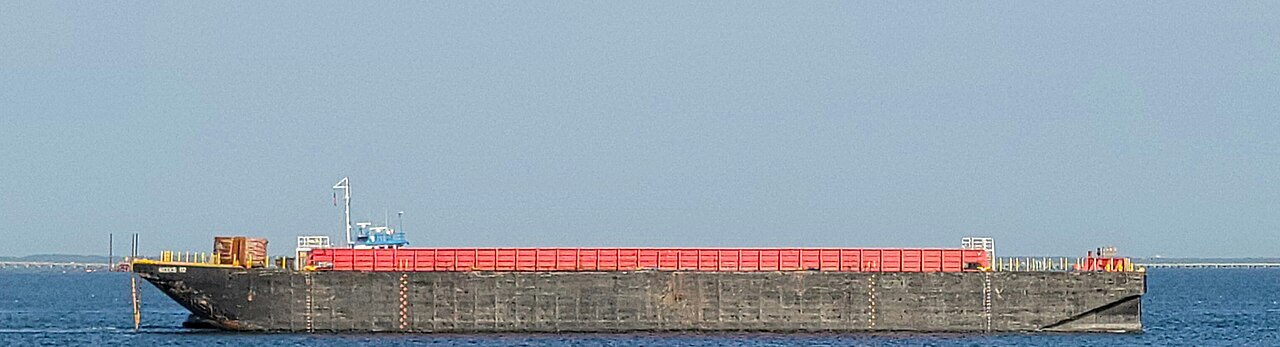
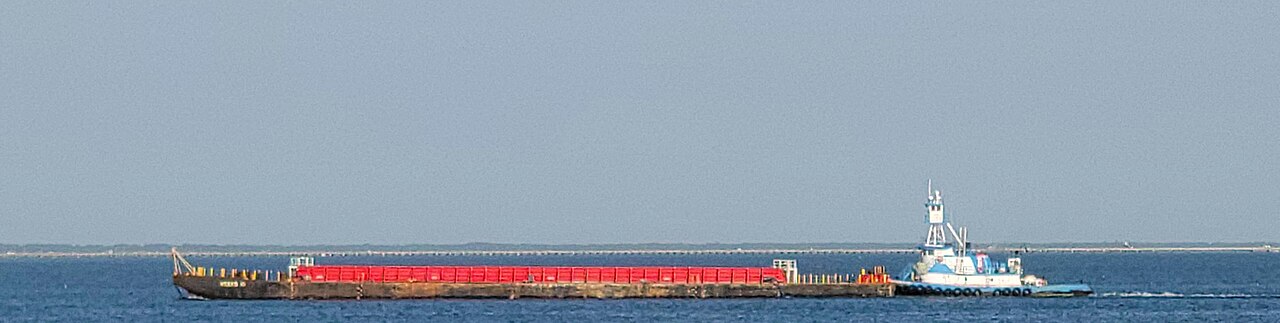
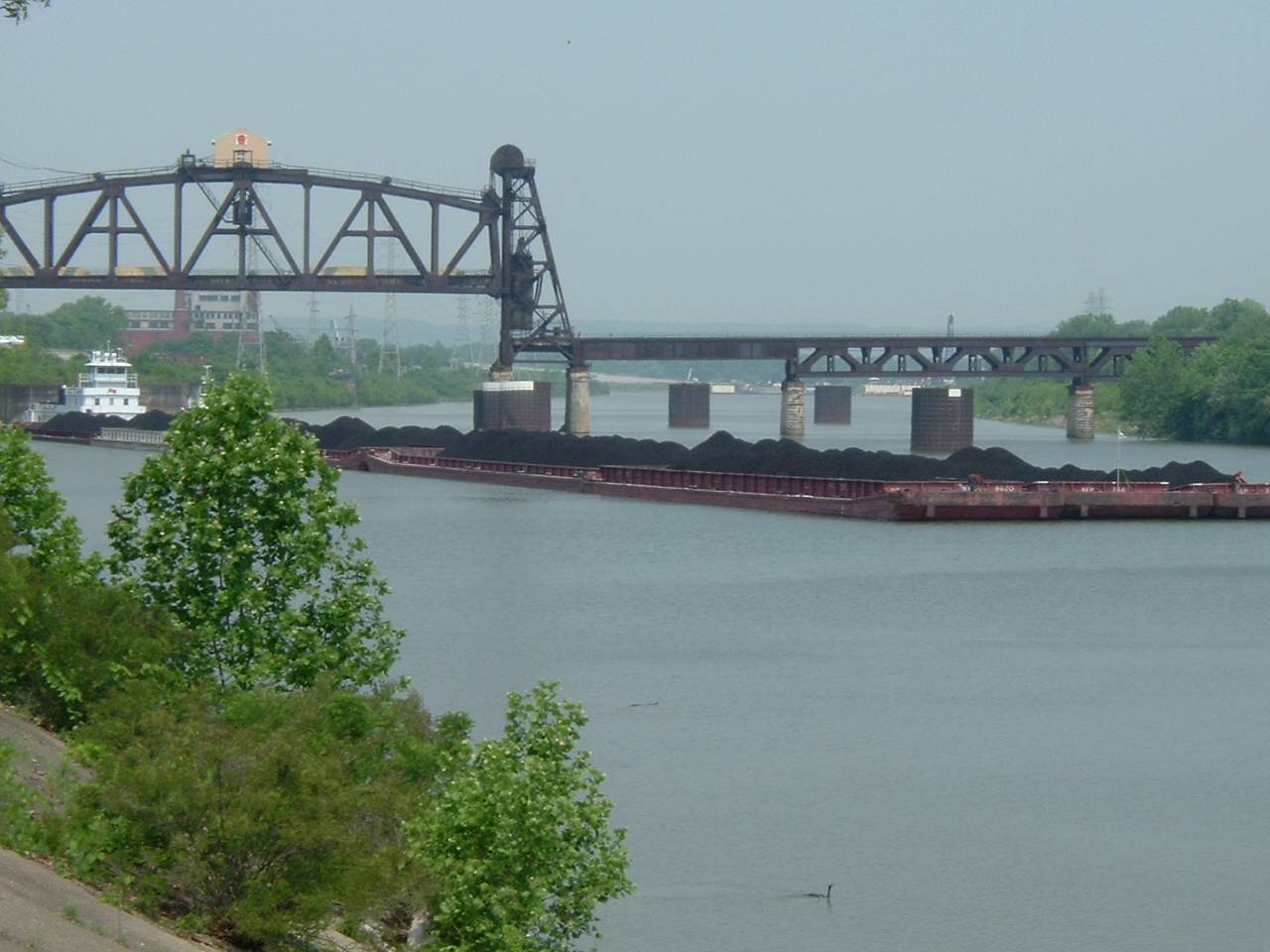
Frequently Asked Questions
What exactly is a barge in transportation engineering?
A barge is a flat-bottomed vessel that lacks its own mechanical propulsion system and is designed primarily to carry cargo. It is the workhorse of bulk freight movement on waterways.
How are barges actually moved along a waterway?
Early modern barges were towed behind tugboats, but today the dominant method on inland rivers is for a pusher boat to drive the barge from behind. Some marine operations still use tug-assisted towing.
What kind of cargo do barges typically transport?
Barges are best suited for low-value, high-volume bulk materials and heavy freight that does not require fast delivery. Think grain, coal, sand, or construction aggregates rather than perishables.
Where can you find barges operating?
Although the concept originated on inland rivers and canals, modern barges function in both freshwater and saltwater environments. Their flat-bottomed hull design makes them adaptable to shallow and deep channels alike.
More in Transportation Engineering 1-17
Spotted an error? Know more?
This is a living reference — every entry is fact-audited, and reader corrections feed straight into our audit queue. Suggest an edit · See this site's audit record