Balloon (aeronautics)
Unpowered aerostat using buoyancy for flight.

Yakshitha · CC BY-SA 4.0
A balloon is an unpowered aerostat that remains aloft or floats due to its buoyancy. It is conceptually the simplest of all flying machines, consisting of a fabric envelope filled with a gas lighter than the surrounding atmosphere. Balloons may be free, moving with the wind, or tethered to a fixed point, and are distinct from airships, which are powered aerostats.
- type
- Unpowered aerostat
- lifting_gases
- Hot air, hydrogen, helium, coal gas, ammonia, methane
- main_types
- Hot air (Montgolfière), gas (Charlière), Rozière (combination)
- modern_common_use
- Sport, leisure, scientific missions
Lore & Background
Hot air balloons soon declined after the advent of hydrogen balloons, but were revived in the 1950s with bottled gas burners. In the 19th century, coal gas was commonly used for its low cost. Modern gas balloons often use helium for safety. Scientific applications use zero-pressure or superpressure balloons, the latter offering endurance of months. The Rozière type, combining heated and unheated lifting gases, was developed for long-distance flights but was dangerous until the 1980s, when non-flammable helium enabled safe operation.
Reader's Guide
Their simplicity—relying solely on buoyancy—made them accessible for sport, observation, and science. Gas balloons enabled high-altitude and long-duration missions, from 19th-century town gas flights to modern superpressure balloons that can stay aloft for months. The revival of hot air ballooning in the 1950s made the activity popular for recreation. Balloons remain vital for meteorological and scientific research, carrying instruments to near-space altitudes. The distinction between free and tethered balloons, and the development of kite balloons for windy conditions, expanded their military and commercial uses. Despite the lack of propulsion, altitude control allows some directional navigation by finding favorable wind layers. The Rozière type, though historically dangerous, has enabled record circumnavigations. Overall, balloons are a foundational technology in aeronautics, demonstrating the principle of lighter-than-air flight.
Did You Know?
- Superpressure balloons can maintain flight for months, typically ended by ground command rather than natural leakage.
- The Rozière balloon type combines heated and unheated lifting gases in separate gasbags.
Ancient Precursors and the Road to Manned Flight
The story of human flight begins not in France but in ancient China, where during the Three Kingdoms era between 220 and 280 CE, the strategist Zhuge Liang employed small paper lanterns filled with heated air as military signaling devices. Centuries later, the Mongol army adopted these Kongming lanterns and deployed them at the Battle of Legnica during their 13th-century invasion of Poland, marking the first recorded encounter with ballooning technology in the western world. In colonial Brazil, the Portuguese Jesuit Bartolomeu de Gusmão envisioned a manned aerial vessel he called the Passarola, intended for communication and strategic purposes. In 1709, King John V of Portugal funded the project after a public petition, and an unmanned demonstration was staged at the Casa da Índia before the king, the queen, and several witnesses. Gusmão also published a manifesto arguing that sailing through air was possible and left behind designs for a crewed craft. In the 1970s, balloonist Julian Nott proposed that Nazca leaders two millennia earlier may have guided the creation of the famous geoglyphs from a balloon, and in 1975 he built and flew a replica using only materials he believed were available to Pre-Inca Peruvians.
Engineering the Modern Balloon
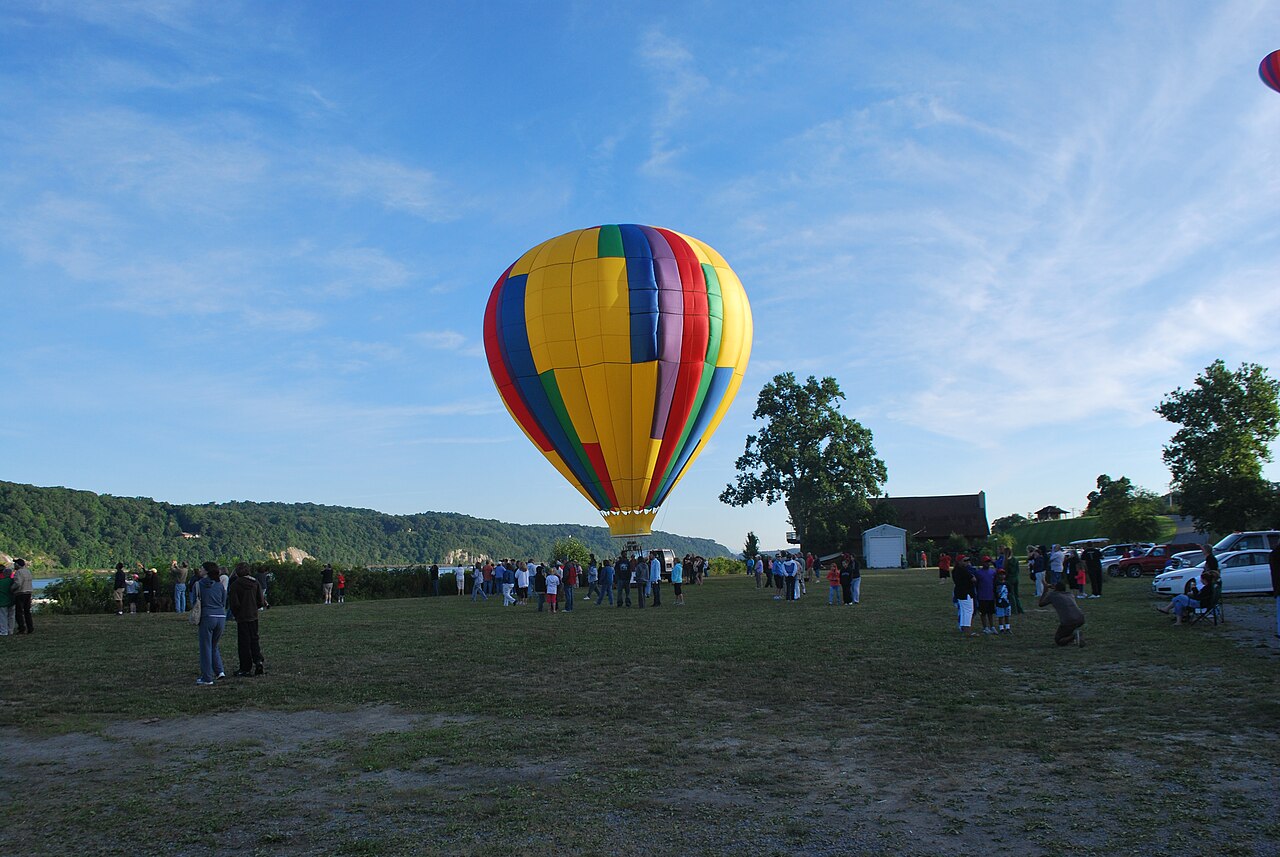
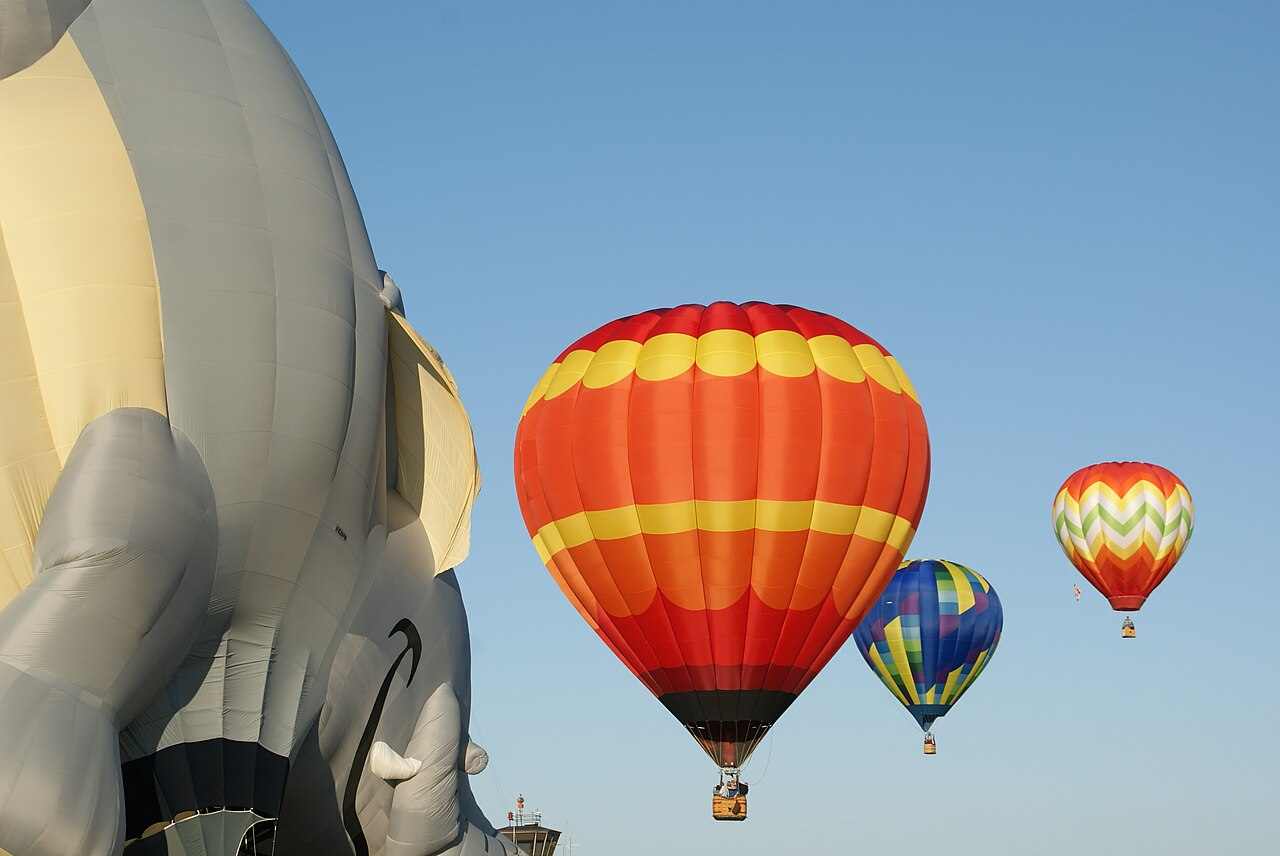
At its core, a hot air balloon relies on a straightforward principle: a large fabric envelope, typically woven from nylon in modern sport models, is filled with air heated by an open flame—most often the combustion of liquid propane. Because the warmed air inside is less dense than the cooler air outside, the assembly becomes buoyant and rises. The envelope does not need to be sealed at its lower opening, since internal pressure roughly matches the surrounding atmosphere. The fabric nearest the burner, however, must withstand intense heat and is constructed from fire-resistant materials like Nomex. Suspended below hangs a gondola, traditionally a wicker basket, though long-distance and high-altitude craft use a more robust capsule. While the classic silhouette remains standard for most commercial and recreational flights, manufacturers have also produced balloons shaped like rockets and branded commercial products. The first practical modern balloons with an integrated onboard heat source were developed by Ed Yost and Jim Winker during the 1950s, culminating in a successful flight on October 22, 1960. The Bristol Belle, completed in 1967, became the first such balloon built in the United Kingdom.
Pushing the Boundaries of Altitude, Speed, and Endurance
The hot air balloon has repeatedly shattered expectations about how far, how fast, and how long a lighter-than-air craft can travel. In the altitude category, Vijaypat Singhania launched from downtown Mumbai on November 26, 2005, and climbed to 21,027 metres before descending 240 kilometres south to Panchale, breaking the previous mark of 19,811 metres set by Per Lindstrand over Plano, Texas, in 1988. Speed records tell a different story. On January 15, 1991, Lindstrand and Richard Branson piloted the Virgin Pacific Flyer from Japan to northern Canada, covering 7,671.91 kilometres in a single crossing. The balloon's envelope, at 74,000 cubic metres, was the largest ever built for a hot air craft, and it was specifically designed to ride trans-oceanic jet streams, achieving a ground speed of 394 kilometres per hour. The endurance crown belongs to Swiss psychiatrist Bertrand Piccard, grandson of Auguste Piccard, and British pilot Brian Jones. Aboard the Breitling Orbiter 3, they departed Château-d'Oex, Switzerland, on March 1, 1999, and touched down in the Egyptian desert 500 kilometres south of Cairo at 1:02 a.m. on March 21, completing the first nonstop circumnavigation of the globe by balloon.
From Battlefield to Global Stage
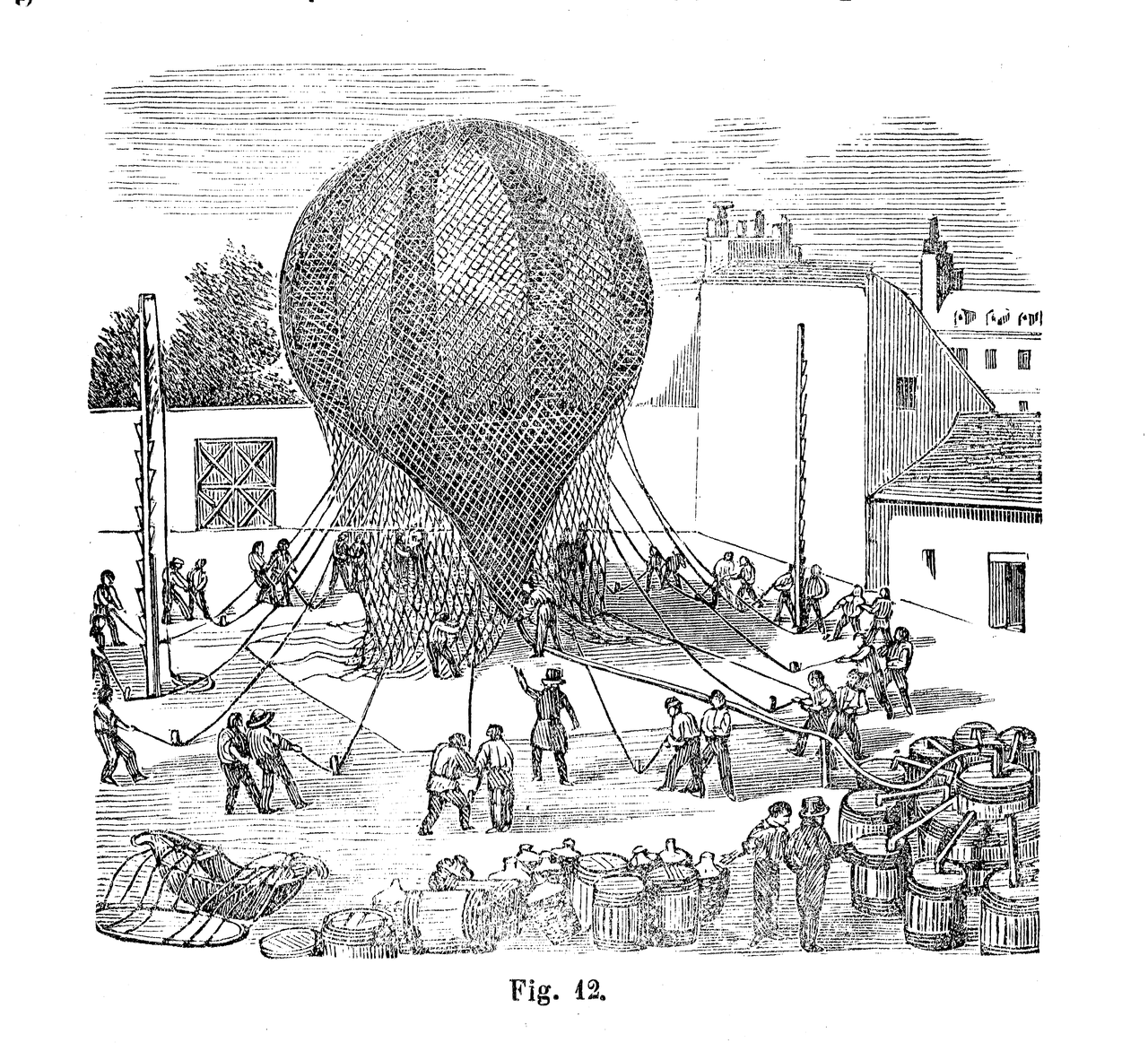
Long before recreational tourism, the hot air balloon was conceived as a tool of war and statecraft. The sky lanterns of Zhuge Liang served as military signals, and the Mongol deployment of Kongming lanterns at Legnica in the 13th century marked an early tactical use in European warfare. Bartolomeu de Gusmão's Passarola was designed as a strategic device and a means of aerial communication. The first confirmed military use of a hot air balloon came on June 26, 1794, at the Battle of Fleurus, where French forces deployed the balloon l'Entreprenant for battlefield observation. The first manned ascents carried political weight: King Louis XVI had originally decreed that condemned criminals would be the first to fly, but Jean-François Pilâtre de Rozier and Marquis François d'Arlandes successfully petitioned for the honour. The Montgolfier brothers' public demonstration in Annonay on September 19, 1783, proved the concept to the public. Pilâtre de Rozier's tethered flights from the Réveillon workshop yard in the Faubourg Saint-Antoine, reaching roughly 26 metres, proved that human flight was no longer theoretical. Today, while the balloon has transitioned into a recreational pursuit, its origins as an instrument of observation, communication, and strategic advantage remain embedded in its design.
Gallery



Frequently Asked Questions
What is a balloon in the context of aeronautics?
A balloon is a buoyant, unpowered flying device that stays aloft because the gas inside its fabric envelope is lighter than the surrounding air. It is regarded as the most basic form of aircraft ever designed.
What gases can provide lift to a balloon?
Common lifting agents include hot air, hydrogen, helium, coal gas, ammonia, and methane. The choice of gas or heated air determines which category the balloon falls into.
What are the three main types of balloons?
They are the hot-air (Montgolfière) balloon, the gas (Charlière) balloon, and the Rozière, which combines heated air with a lighter-than-air gas for lift.
How does a balloon differ from an airship?
A balloon is unpowered and either drifts with the wind or is anchored by a tether, whereas an airship is a powered aerostat with its own propulsion system. Both rely on buoyancy, but only the airship can steer independently of the wind.
More in Transportation Engineering 1-17
Spotted an error? Know more?
This is a living reference — every entry is fact-audited, and reader corrections feed straight into our audit queue. Suggest an edit · See this site's audit record