Aircraft engine
Power component of aircraft propulsion systems.

Hmvh · CC BY-SA 4.0
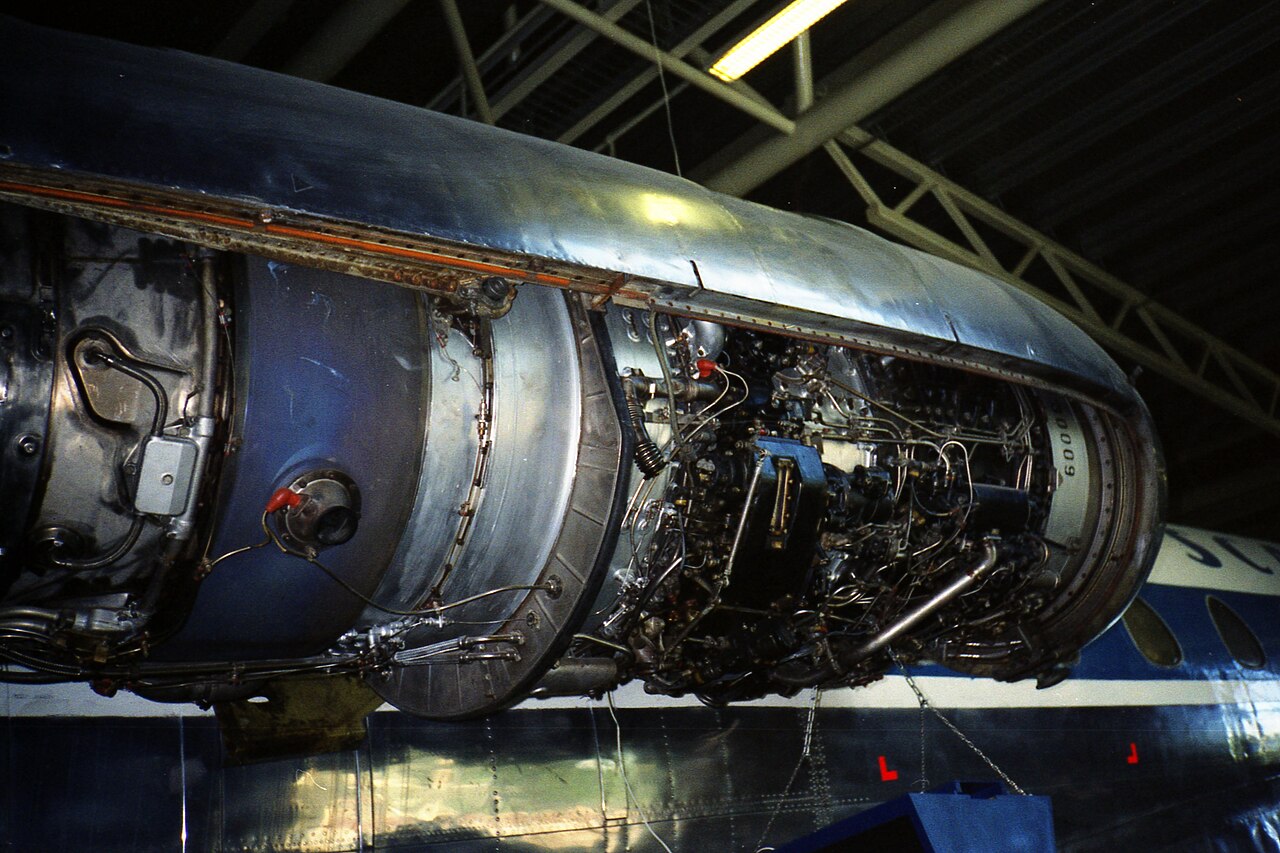
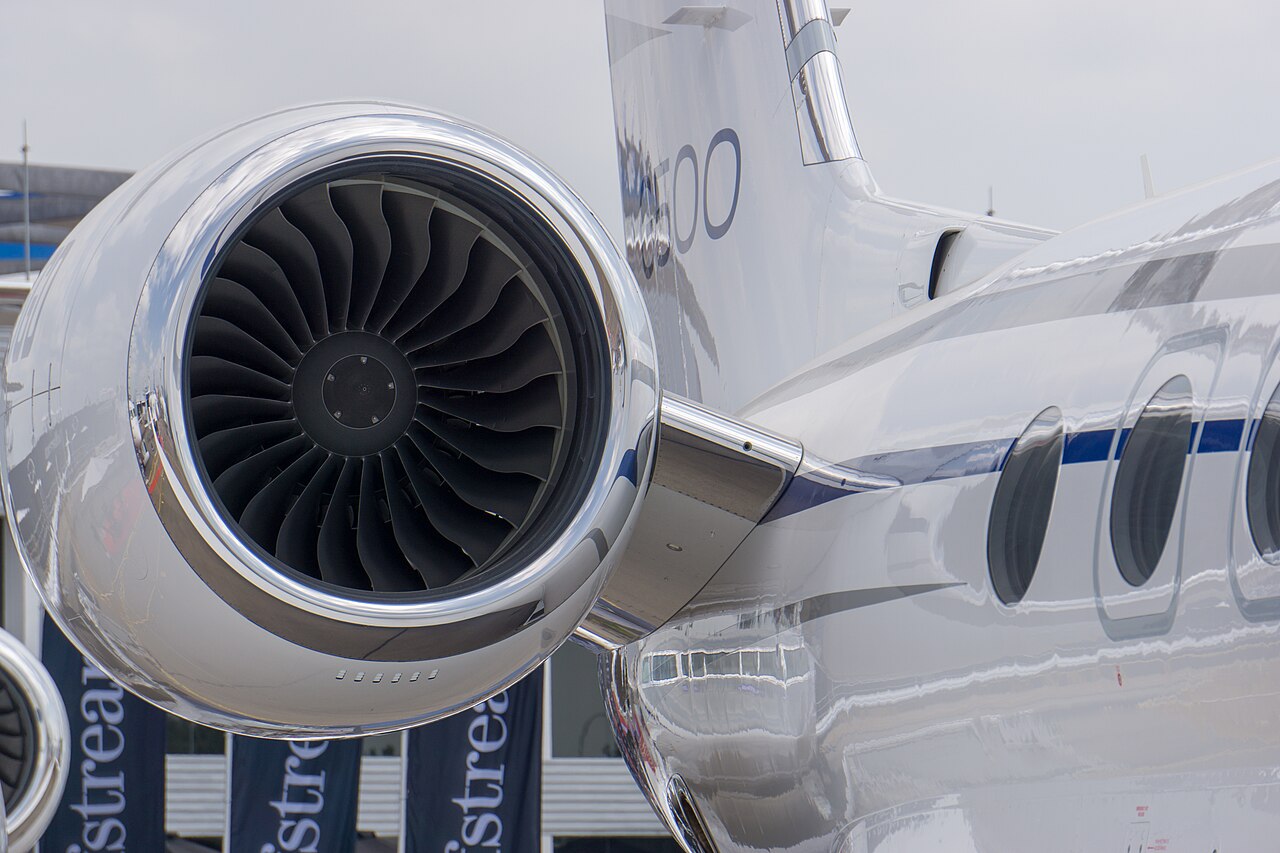
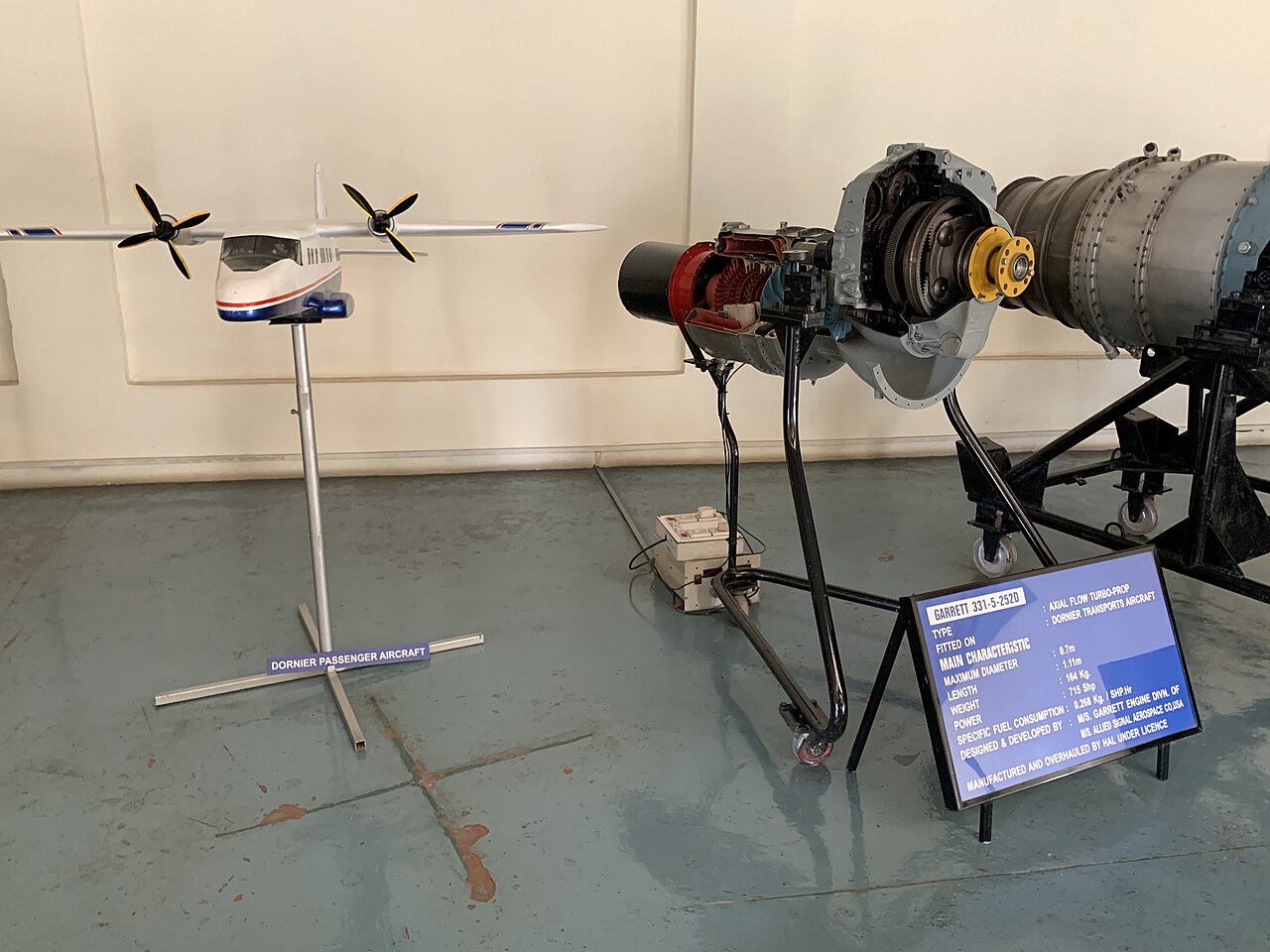
An aircraft engine, often referred to as an aero engine, is the power component of an aircraft propulsion system. Aircraft using power components are referred to as powered flight. Most aircraft engines are either piston engines or gas turbines, although a few have been rocket powered and in recent years many small UAVs have used electric motors.
- field
- Aircraft propulsion
- known_for
- Providing power for powered flight; dominated by piston engines and gas turbines
Lore & Background
A patent was filed for routing exhaust gases into the duct to augment thrust. Reciprocating engines include in-line, V-type, horizontally opposed, H configuration, and radial engines. A radial engine has cylinders placed in a circle around the crankshaft and is air-cooled, which can lead to overheating; compared to liquid-cooled engines, radial engines are more rugged and capable of absorbing damage. Rotating radial engines have the cylinders in a circle around the crankcase, but the crankshaft is fixed to the airframe and the propeller is fixed to the engine case, so the crankcase and cylinders rotate—a design known as a rotary engine. The Wankel engine, a type of rotary engine, is about half the weight and size of a traditional four-stroke cycle piston engine of equal power output and much lower in complexity; it does not seize when overheated, an important safety factor for aeronautical use. Starting in the 1930s, attempts were made to produce a practical aircraft diesel engine. Diesel engines are more reliable and better suited for long periods at medium power, but lightweight alloys of the 1930s were not up to handling the higher compression ratios, so they generally had poor power-to-weight ratios. Improvements in Diesel technology in automobiles, better fuel efficiency, and high relative tax
Reader's Guide
Aircraft engines are central to powered flight, with piston engines and gas turbines dominating the field. The market for aircraft engines, especially jet engines, has very high barriers to entry: development takes around eight years and billions of dollars or euros, and engines must pass exacting safety certifications. Engines are typically sold at a loss, with profits derived from maintenance services and parts over the roughly thirty-year lifespan, following the razor and blades business model. Many big companies, such as Siemens, are developing high-performance electric engines for aircraft use. The Wankel engine, though not widely adopted in aircraft, has been used in motor gliders where compactness, light weight, and smoothness are crucial.
Founding and the Decision to Build In-House Power
Jabiru Aircraft Pty Ltd traces its origins to 1988, when Rodney Stiff and Phil Ainsworth established the company in Bundaberg, Queensland, with the goal of producing affordable light aircraft in both kit and certified configurations. The venture gained official recognition in October 1991 when the Australian Civil Aviation Authority certified the first model, the Jabiru LSA 55/2k. A pivotal moment in the company's trajectory came when its original engine supplier, Italian American Motor Engineering, ceased production of the KFM 112M aero engines. Rather than sourcing an alternative off-the-shelf powerplant, the firm committed to developing its own propulsion systems. By 1995, the Jabiru 2200—a horizontally opposed, four-cylinder, air-cooled aviation engine—was ready for delivery, marking the beginning of an in-house engine programme that would grow to include six- and eight-cylinder variants. The same year, the company also pivoted to offering its aircraft as amateur-build and experimental self-build kits, broadening its market reach considerably.
Engine Lineup, Specifications, and Production Scale
Jabiru's engine portfolio is built around a consistent engineering philosophy: lightweight, four-stroke, horizontally opposed, air-cooled powerplants purpose-designed for aviation use. Every unit in the range operates as a direct drive and ships with alternators, mufflers, and dual ignition systems as standard equipment. The current lineup spans the 2200, delivering 80 horsepower (60 kW) from four cylinders, and the 3300, producing 120 horsepower (89 kW) from six. Earlier models included the 1600 at 60 horsepower and the 5100, an eight-cylinder unit rated at 180 horsepower (134 kW). Production volumes underscore the engines' market acceptance: more than 3,900 four-cylinder units and over 2,900 six-cylinder units have been manufactured to date. The engines power a diverse fleet, from the 80-horsepower two-seaters like the J120, J160, and J170, to the 120-horsepower J230, and even the twin-offset 80-horsepower configuration of the J432.
Design Philosophy, Materials, and the Aircraft Range
Jabiru aircraft are constructed predominantly from modern composite materials, yielding structures that are simultaneously strong and remarkably light. The design language is that of a conventional high-wing monoplane, typically fitted with a tricycle undercarriage, though taildragger configurations appeared during the company's early years. A practical feature carried through the range is the ability to detach the wings, simplifying storage and ground transportation. Interior layout prioritises the occupants: the cabin is spacious and comfortable for touring, while the overall footprint and frontal profile remain compact. Controls are arranged around a centrally mounted column with an integrated brake and trim lever. The model spectrum is broad, covering microlights such as the Calypso, two-seat trainers and recreational types from the J120 through the J230, and four-seat aircraft including the J400, J430, and J450. The J430, for instance, adds winglets to strike a balance between short take-off and landing capability and cruise speed. An assembly facility in George, Western Cape, South Africa, extends the brand's manufacturing footprint beyond Australia.
The 2014 Regulatory Challenge and Industry Pushback
In November 2014, the Australian Civil Aviation Safety Authority imposed a set of operational restrictions on light aircraft operators, requiring passengers to sign an acknowledgement of risk before each flight and limiting IFR-equipped aircraft to day visual-flight-rules operations within gliding distance of a safe landing area. Over the following two years, CASA inspectors personally witnessed the tear-down examinations of both failed Jabiru engines and high-time engines that had not experienced failure. By 2016, the authority granted exemptions to these restrictions for aircraft that fully complied with the manufacturer's maintenance manuals, service letters, bulletins, and flight operation manuals, and that carried no unapproved modifications. Both Jabiru and Recreational Aviation Australia strongly contested the original restrictions as unnecessary and unwarranted. RA-Aus further raised concerns about transparency, noting it received only a fraction of CASA's underlying source data just one day before submission deadlines closed, and that the regulator appeared to have excluded all engine reliability data from after early 2014.
Gallery
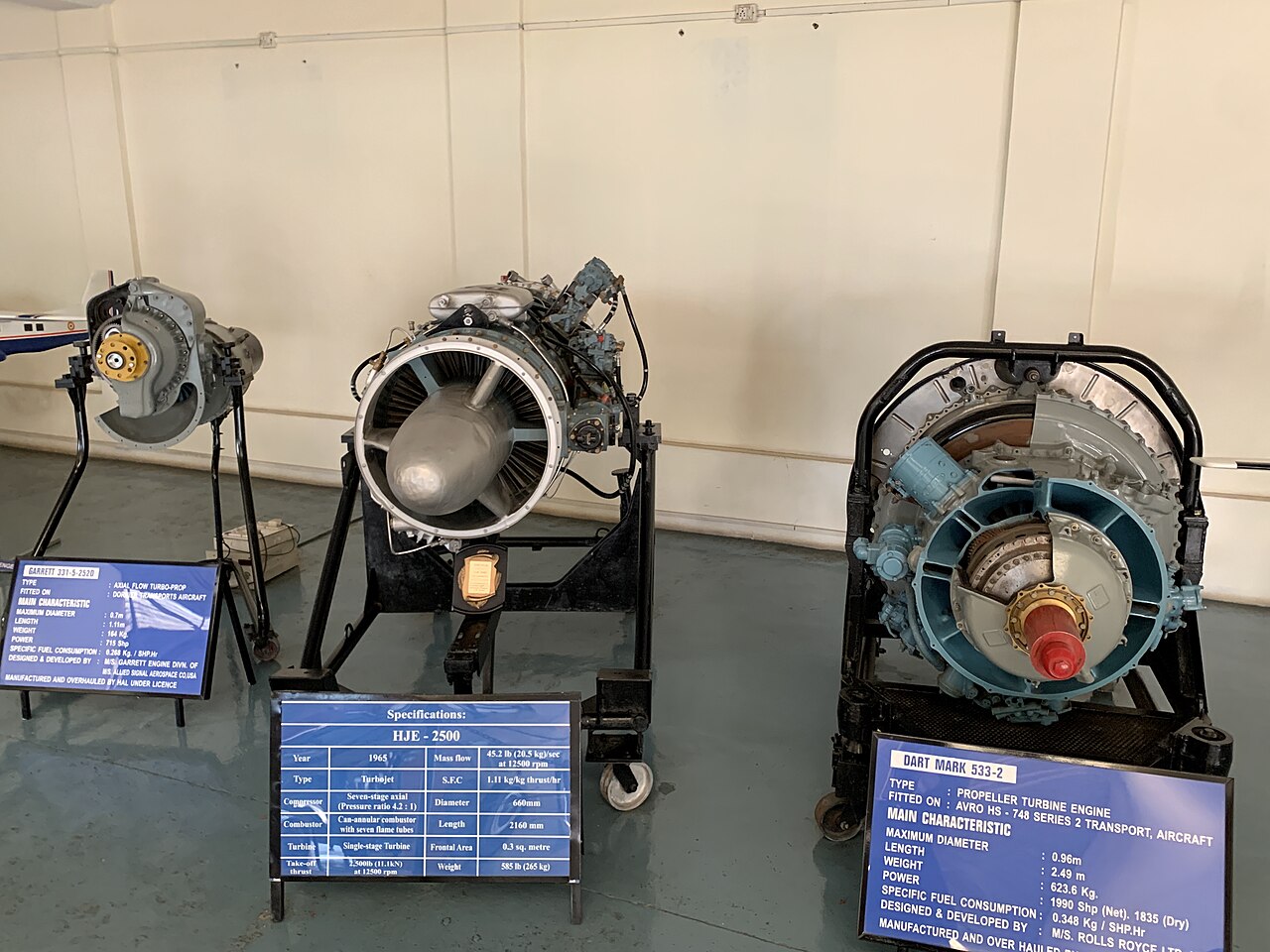
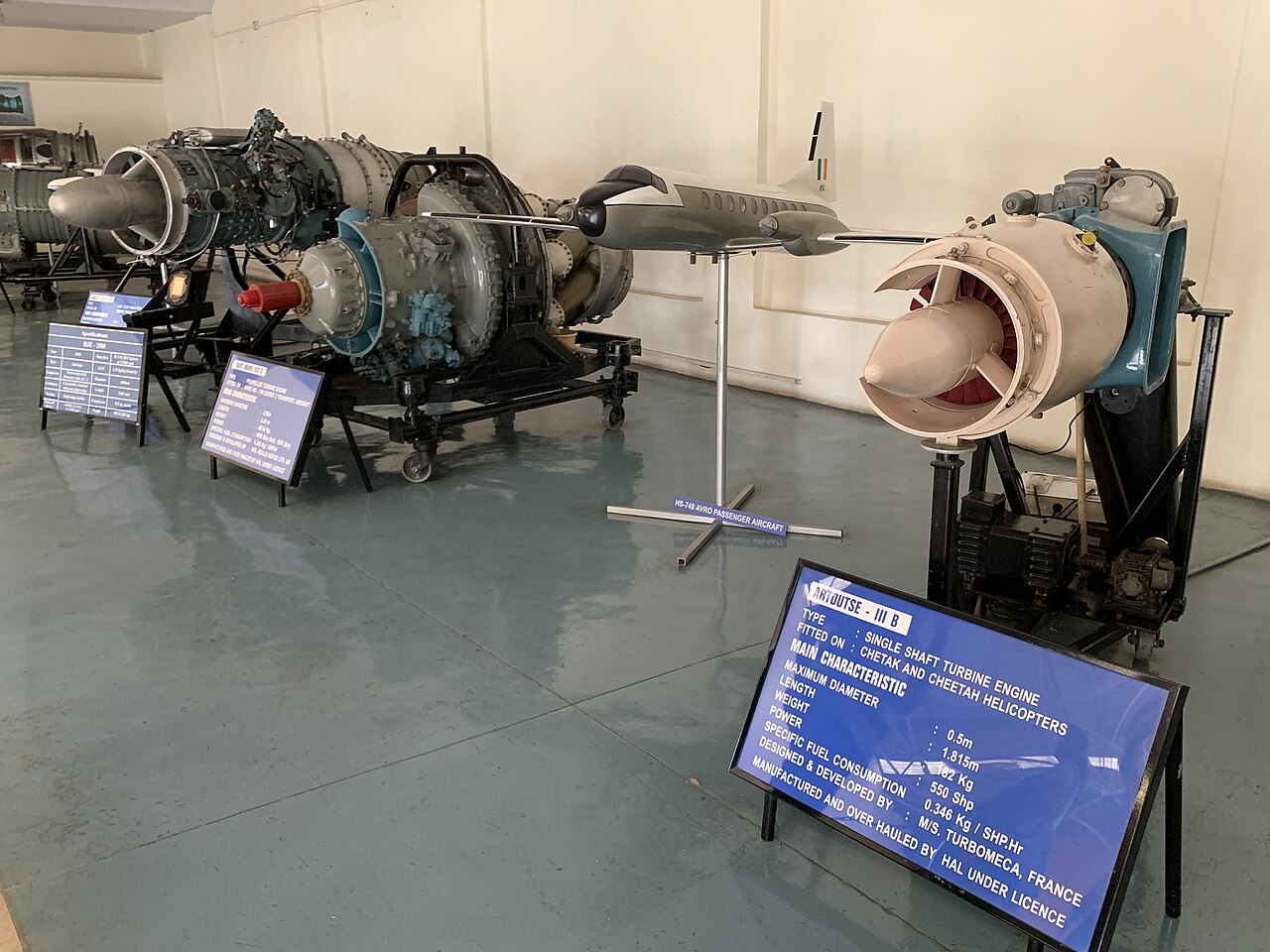
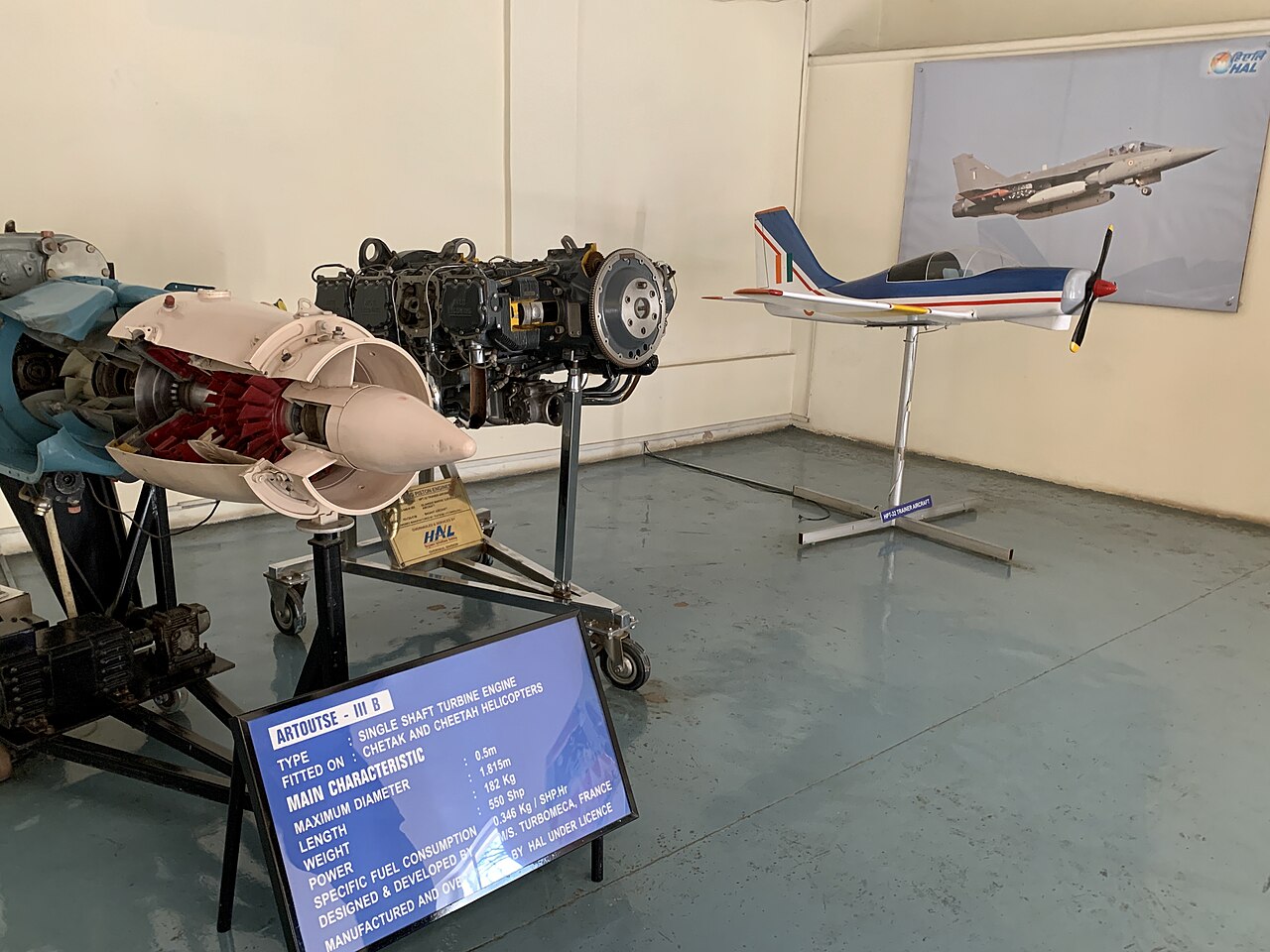
Frequently Asked Questions
What is Aircraft engine?
Aircraft engine, also called an aero engine, is the core power component that drives an aircraft's propulsion system. Without it, an aircraft simply cannot achieve powered flight.
Why is Aircraft engine important to the field?
It sits at the heart of every powered aircraft, converting stored energy into thrust or shaft power that makes flight possible. The entire discipline of aircraft propulsion revolves around its design and optimization.
What's Aircraft engine's role in modern small UAVs?
Many small unmanned aerial vehicles now rely on electric motors rather than traditional combustion engines, marking a shift in how propulsion is delivered at the small-aircraft end of the spectrum.
More in Transportation Engineering 1-17
Spotted an error? Know more?
This is a living reference — every entry is fact-audited, and reader corrections feed straight into our audit queue. Suggest an edit · See this site's audit record